MCAT

Your 2-Year Plan: From MCAT Prep to Matriculation

A general timeline to keep you organized, proactive, and prepared. Adjust the months to fit your own application cycle β€” the sequence matters more than the exact calendar dates.
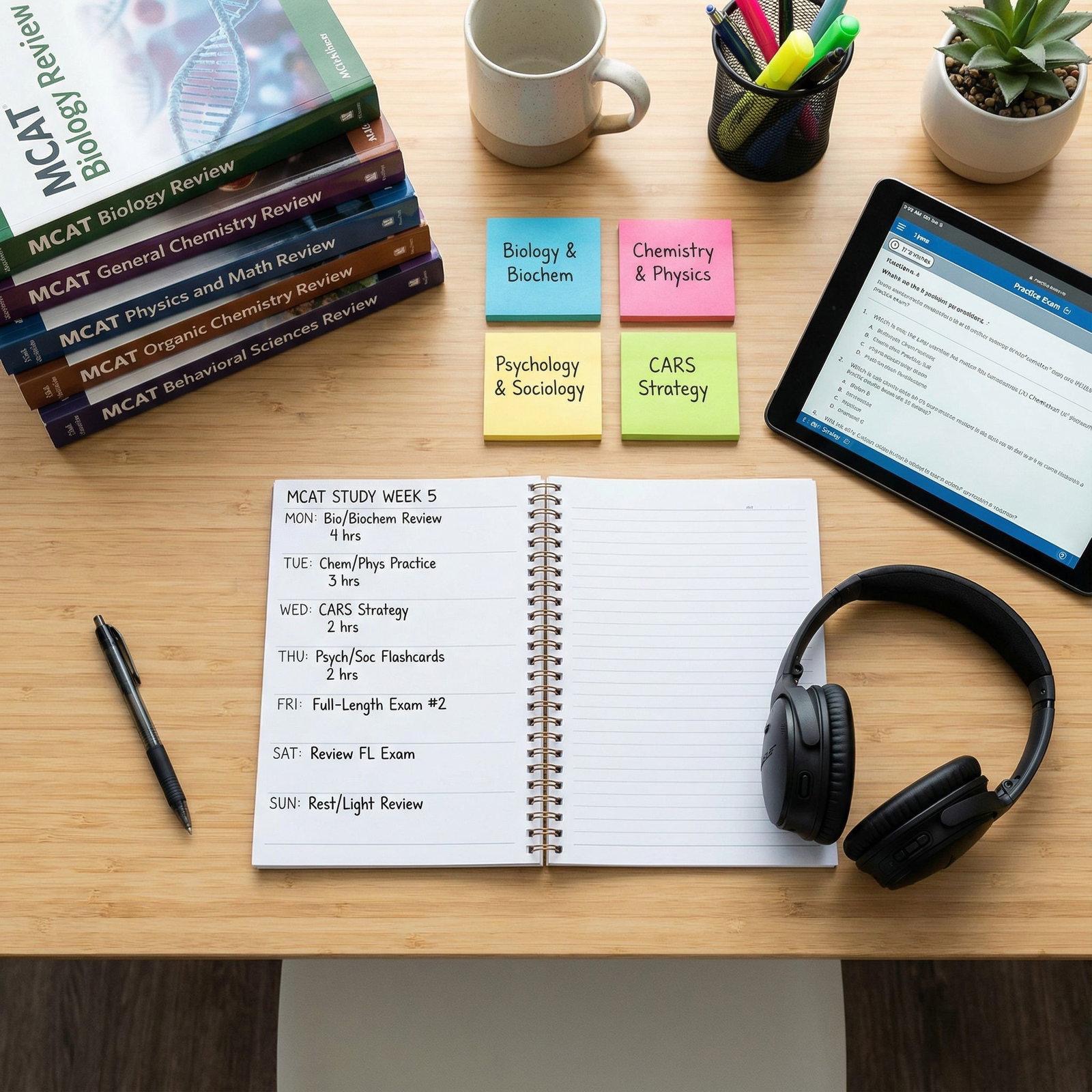
MCAT study materials, a weekly study schedule, and a practice exam on a tablet
Year Before You Apply β€” Planning + MCAT Prep + Foundations
πŸ“… JanuaryBefore Application Year
Plan + Start Early
  • Select your MCAT date to aim for
  • Begin studying with content review (re-learning and building a strong foundation)
  • Choose a date that gives you 3–4 months of prep
  • Consistency > intensity in the beginning
πŸ“– February – AprilBefore Application Year
Continue Content Review
  • Work through content systematically
  • Take a diagnostic practice exam
  • Build strong content mastery
  • Use this time to learn, not just memorize
  • Create a schedule and stick to it
πŸ“ˆ May – AugustBefore Application Year
Hit MCAT Prep Hard
  • Shift from content review to practice (practice problems, full-length exams, AAMC materials)
  • Focus on timing, stamina, and applying knowledge
  • Quality practice > quantity
  • Review every practice test thoroughly
  • This is your full-time MCAT period (if possible)
✏️ May – SeptemberBefore Application Year
Start Personal Statement Drafts
  • Begin brainstorming broadly
  • Reflect on experiences, motivations, and goals
  • Outline key stories and themes
  • No need for perfection β€” just start
  • Ask for feedback early
  • Plan to have a first initial draft done by September
πŸ—“οΈ September – DecemberBefore Application Year
Refine MCAT Skills + Write PS Draft
  • Continue full-length practice exams
  • Review weak areas
  • Draft and revise personal statement
  • Aim for a polished draft of your personal statement by December
  • Stay consistent and protect study time
🎯 By JanuaryBefore Application Year
Complete MCAT
  • Take your MCAT by January
  • Gives you time to retake if needed
  • If a retake is needed, you'll still have time before applications open
  • Don't wait β€” give yourself options
Application Year β€” Get Organized + Apply
πŸ“‹ January – AprilApplication Year
Finalize Application Materials
  • Write / edit / finalize Work & Activities (W&A)
  • Write 3 associated Most Meaningful Experiences (MMEs)
  • Prepare final versions of Personal Statement
  • Gather letters of recommendation
  • Be thoughtful and concise
  • Show impact, not just responsibility
  • Get feedback and polish early
  • Don't wait until May!
πŸ“¨ MayApplication Year
Applications Open (AMCAS)
  • Add final W&A and MME copies
  • Submit your primary application ASAP
  • Start preparing for secondaries
  • Early submission = earlier verification
  • Verification can take several weeks
  • Create a spreadsheet to track schools & secondaries
βœ‰οΈ End of June – Mid/AugustApplication Year
Secondaries Season
  • Start receiving secondaries (late June)
  • Aim to complete within 2 weeks of receipt (the unspoken rule)
  • All secondaries finished by mid–late August
  • Turnaround time shows interest & professionalism
  • Pre-write common essays
  • Stay organized and don't fall behind
πŸ‘₯ August – MarchApplication Year
Interview Season
  • Interview invites typically begin in August and continue through March
  • Format: Traditional, MMI, or virtual
  • Prepare: practice, research schools, polish your stories
  • Respond ASAP to invites
  • Be authentic, professional, and mission-aligned
  • Send thank-you notes within 24–48 hours
πŸŽ“ October – AprilApplication Year
Decisions Roll Out
  • Early decisions: October – December
  • Majority: January – April
  • Waitlists continue into May/June
  • Check portals and email regularly
  • Update letters of intent if interested
  • Stay patient and keep perspective
After Acceptance
🩺 May – AugustPost-Acceptance
Prepare for Med School
  • Secure your spot (pay deposit)
  • Complete pre-matriculation requirements
  • Attend orientation & get excited!
  • Stay in touch with your school
  • Focus on finishing strong
  • You did it β€” time to celebrate and prepare for the next chapter!

Remember

Stay organized, plan ahead, and start early. The earlier you prepare, the more options you'll have and the less stress you'll feel.

Study Resources

MCAT Prep Materials

A few resources worth budgeting for β€” pick based on your learning style and timeline, not all four at once.
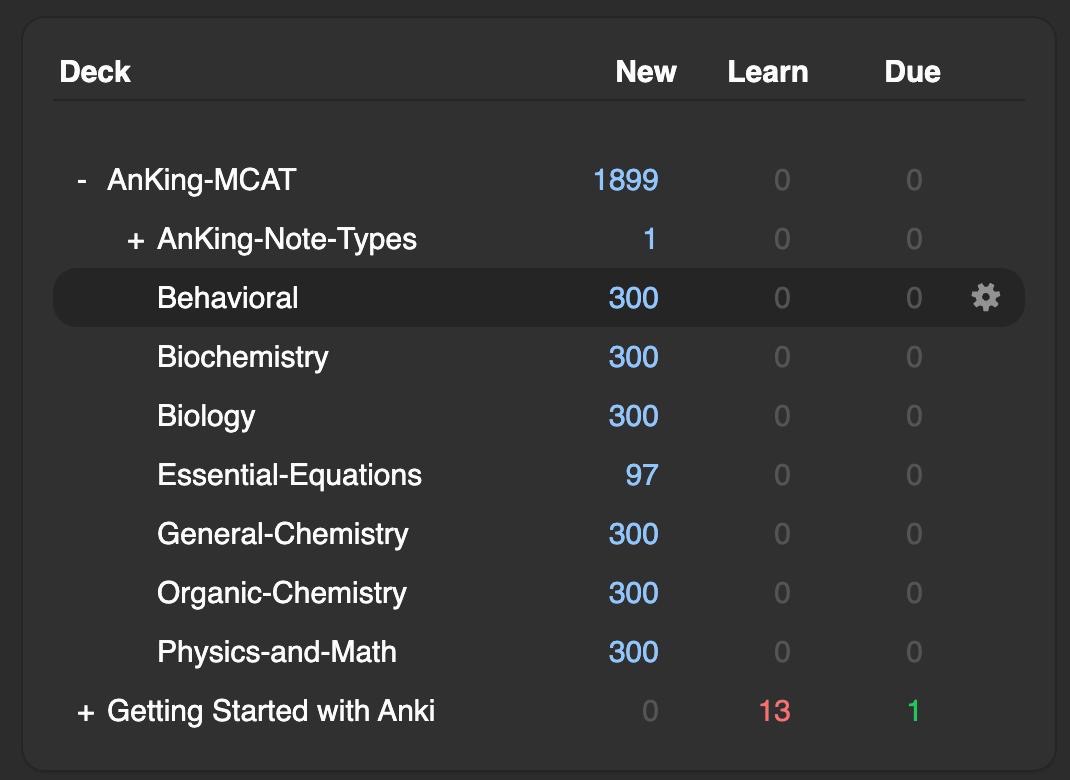
Screenshot of an MCAT Anki flashcard deck
Free Bonus Resource

Spaced-repetition flashcards with Anki

Anki is a free flashcard service built around spaced repetition β€” a study method that resurfaces a concept right before you're about to forget it, so the content you're reviewing actually moves into long-term memory instead of fading a week after you first learned it. It's one of the most effective ways to drill the sheer volume of content the MCAT requires you to master.

Plenty of students supplement their paid materials with a free, community-built deck for daily review β€” search for "AnKing MCAT deck" to find the current version, since links to community decks change over time.